Monday, June 26, 2006

throw the book at this bastard

Thursday, June 29th at 1:30pm

Downtown at City Hall, Municipal Court (2nd Floor)


This is the time and place for the sentencing hearing for the criminal that was caught last week breaking into a vacant home on the North Side, stealing its contents and destoying its interior. This type of behavior has progressively destroyed many of our city neighborhoods, and now is the opportunity for the public to display its feelings on this type of crime. Please join us this week at City Hall. We need your presence. Spread the word.

here is a message from the Ytown Homes and Historic Buildings Yahoo group:

All interested parties are strongly encouraged to attend this hearing. It is important that the courtroom be filled to capacity to send a strong message to the court, and the community in general, that this house stripping activity of vacant properties on the North Side is not a "victimless crime".

All residents of our North Side neighborhoods are adversely affected by this activity. The scavengers must be apprehended and incarcerated for the maximum length of time that the law provides in order that these vacant properties can be peacefully restored, rehabilitated and occupied as soon as possible.


---------------

We MUST start sending a message to the courts and to city hall that breaking into and stripping the antiquities from Youngstown's homes will NO LONGER be tolerated!

(thanks to A for the information)

Friday, June 23, 2006

Choosing neighborhood projects with technology

- Was at lunch with a friend yesterday and we were discussing a paper about how social pressures impact autonomous decision-making, which inhibit reaching the best solution.

- Read a community bulletin board two days ago and the posts were complaining about how people in the community don’t get involved in local efforts.

- Received an email today from the Youngstown Business Incubator and it stated the CEO of Turning Technologies won an award from Ernst & Young for “Entrepreneur of the Year” as that company produces the #1 audience response system in the world.

- Listened to a radio show this morning and some city residents were complaining about elected officials and how as citizens they have very little input in the matters of local government.

What do these have to do with each other?

Maybe we can come up with a method to increase residential participation, strengthen the power of neighborhood organizations, create neighborhood improvement projects, and disseminate local technology all in one swoop.

Well I have an experiment to propose:

Youngstown City Council will set aside $40,000 for this “grassroots neighborhood development” exercise. Each of the 10 residential zones in the city (as defined in the Youngstown 2010 plan) will be appropriated $2,000 to spend on neighborhood improvement projects – and the money can be spent on anything the neighborhood chooses, reached by consensus or some voting technique. A $10,000 bonus will be awarded by the city to the two neighborhoods with the best ideas, as chosen by the Community Development Agency or some committee.

Letters will be sent to every household describing (a) the structure of the program, (b) a number to call if they want to join a neighborhood blockwatch, and (c) a fill-in page where residents can anonymously list projects in their neighborhood that deserve funding and why. Their responses can be mailed or dropped off at some central location in their neighborhood. They will also be told of a future date where the neighborhood will come together to vote on how to spend the money.

At these various neighborhood meetings, a powerpoint presentation that contains all of the ideas provided by the neighborhood residents will be shown. Incorporating Turning Technologies’ audience response hardware, the people in attendance will use that technology to help them to autonomously choose how much they favor certain projects, and perhaps consensus can be reached on how to spend the $2,000.

This type of system may produce certain benefits:

(1) In addition to having ten initiatives to fund as chosen through the process, city officials will also now have a laundry list of suggestions as submitted by a hopefully diverse set of individuals.
(2) Give residents the feeling they have the direct ability to impact how money is spent and thus, a larger (and more content) voice in the process
(3) Introduce residents to the products of YBI companies and the novel approach of incorporating technology into the decision-making process.
(4) Increase the possibility of individuals joining a neighborhood group, and increase the ability for the neighborhood to improve its surroundings.

Well, this is just a brainstorm after absorbing some opinions today. Can something like this ever work, or have the desired effect of a stronger Youngstown?

Saturday, June 17, 2006

we are all outlaws in the eyes of america

world cup fever baby!


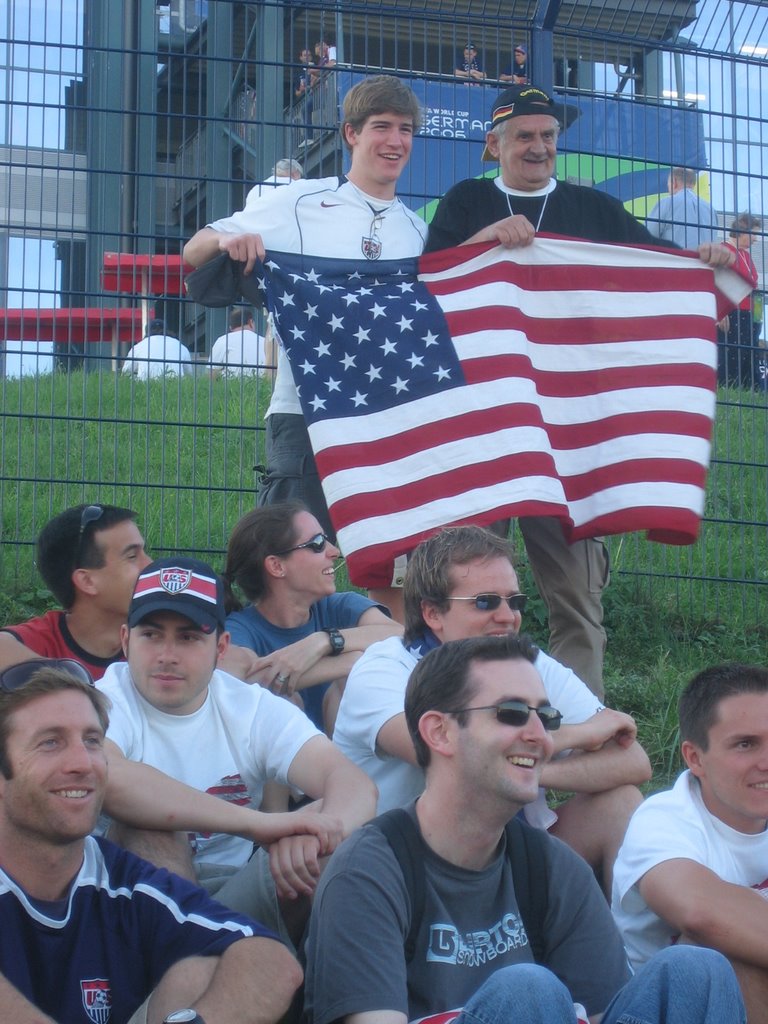
Had the chance to make it out to Germany this week for one of the USA World Cup matches. Click here and here to see some pre-game video. After licking our wounds from the 3-0 thrashing by the Czech Republic (Boze moi!), our group of 23 buddies found some solace in schnitzel and hefeweizen. The match was in Gelsenkirchen, kinda like the Youngstown of Germany because of its industrial heritage.


Our group even represented a good mix of cultures: Ohio, Iowa, Idaho, California, New Mexico, Tennessee, Scotland, Northern Ireland, England, El Salvador, France, Germany – people would just come up to us, asking to have their picture taken with us. “Where are you from?” they asked, and we could just say, “well, from all over the place really”.

A poll on the Youngstown Vindicator’s website, the local newspaper of record, asked its readers how much they were interested the world cup. The results:

Yes, I am really interested: 9%
Umm, I am moderately interested: 7%
No, I could care less about the damn thing: 84%

In cities around the world, people are meeting in public places to watch these matches, even if their country is not represented. From shopping malls in Hong Kong to militia strongholds in Somalia to a campo in Patagonia (thanks CNN international for the story this morning)

I hope tonight we fare better. I have an Italian roommate, who has many Italian friends coming over to watch the match. If it is a rout, the living conditions may become unbearable.

But one last Youngstown kick: these matches will going on every week until mid-July. Is there any chance of putting a big projection screen somewhere downtown so the public can come together to watch these games?

Maybe the international community will come out in full force in addition to other futbol fans. Maybe coaches can bring their soccer teams, who will come with their families. Maybe high school teams can join as well. The final match is Sunday July 9th.

Friday, June 16, 2006

time to ramp up to PhD programs?

Today's Plain Dealer contains an article highlighting Ohio's new Economic Growth Challenge/Innovation Incentive Program, where the state matches money appropriated by Ohio universities that is focused towards doctoral programs in science and technology.

13 Ohio universities are a part of this program, including Cleveland State University, Case Western Reserve University, Kent State University and the University of Akron from Northeast Ohio. Youngstown State University is not.

I've had a lot of dicussions over the years whether the best way to encourage innovation is to target investment into a few select areas or to spread the wealth around. As taxpayers, we want our money to be spent where it may have the greatest impact.

So as the state is reorienting some of its appropriations towards tech-based economic development, is now the time when Youngstown State University needs to reorient itself to build doctoral research programs? At the moment, Youngstown State only offers doctoral degrees in the field of education.

Maybe it should start to build doctoral programs in its prolific chemistry department. Or maybe it can build a doctoral program within the computer science department, which will create additional opportunities with the expanding software-based Youngstown Business Incubator.

It would be great to read one day how Youngstown State has joined the company of these other universities from Northeast Ohio that have learned to leverage their research programs for future development.

Thursday, June 15, 2006

drisana-nari was, like absinthe, the toast of pittsburgh

The other day I was doing a quick search for the number of SBIR grants which were attained by businessesin Youngstown over the past decade. These Small Business Innovation Research (SBIR) grants are offered by various entities within the U.S. Government, such as the Department of Defense and the Department of Energy, and are often used as a metric of innovation for a geographical area. I was searching though databases for this information, and then a question occurred to me: do some organizations in NEO track all of these types of countable innovation metrics for both the Northeast Ohio region and the individual metropolitan statistical areas within NEO?

I few weeks ago, I read the impressive “State of the Industry Report” published by the Pittsburgh Technology Council. This document is produced annually and tracks a number of metrics of the technology and information-intensive industry in the Pittsburgh region. Not only is it informative, but the layout is great also. It is colorful, well-organized, and the electronic pdf version contains numerous clickable pathways so you can navigate easily to employment data, small vignettes about local businesses, and other specific components of the report. I liked the ability to jump from point to point within the report, and the ease of returning to the body as I read through to their recommendations. The report can be downloaded here.

Look to page 27 of a clickable summary of its contents. Five primary clusters of technology industries are identified: information technology, life sciences, advanced manufacturing, advanced materials, and environmental technology. The report continues to track employment size, number of companies, and the payroll for specific sectors within these five clusters. They do this for both the seven-county Pittsburgh MSA and the thirteen-county Pittsburgh region.

What I really found interesting was the change over time in the amount of university R&D expenditures, science and engineering graduate students, patents filed and issued, start-up companies, SBIR awards, venture capital, and initial public offerings (IPO) that were presented. Again, it would be great to see all of these metrics for NEO. Any suggestions on where to find this?

And one other interesting thought:

Adjacent Lawrence County (just a few miles from downtown Youngstown on the other side of the OH-PA line) is part of the thirteen-county area that is encompassed by the Pittsburgh Technology Council’s geographical boundaries. Nearby Butler County is included in the seven-county Pittsburgh Metropolitan Statistical Area. As the suburbs of Cleveland and Pittsburgh areas blend with the suburbs of the Youngstown area, their economies are becoming more entwined as well. Maybe there are strategies Youngstown can leverage as a member of NEO and additional strategies that can be developed from the path that the Pittsburgh region is taking.

We are smack in the middle of Cleveland and Pittsburgh. Jumping yard to yard in Youngstown, you see Browns flags and Steelers flags. The radios in our neighborhoods are tuned to both Indians baseball and Penguins hockey. If there is such a tie to both regions, then maybe we can leverage their economic development strengths of both areas to our advantage. Or bigger yet, should both Northeast Ohio and Southwestern Pennsylvania be developing strategies together?

Friday, June 09, 2006

tacoed!

this is a story about a boy and his milk

and the bike that made it all possible on his day off

- - -

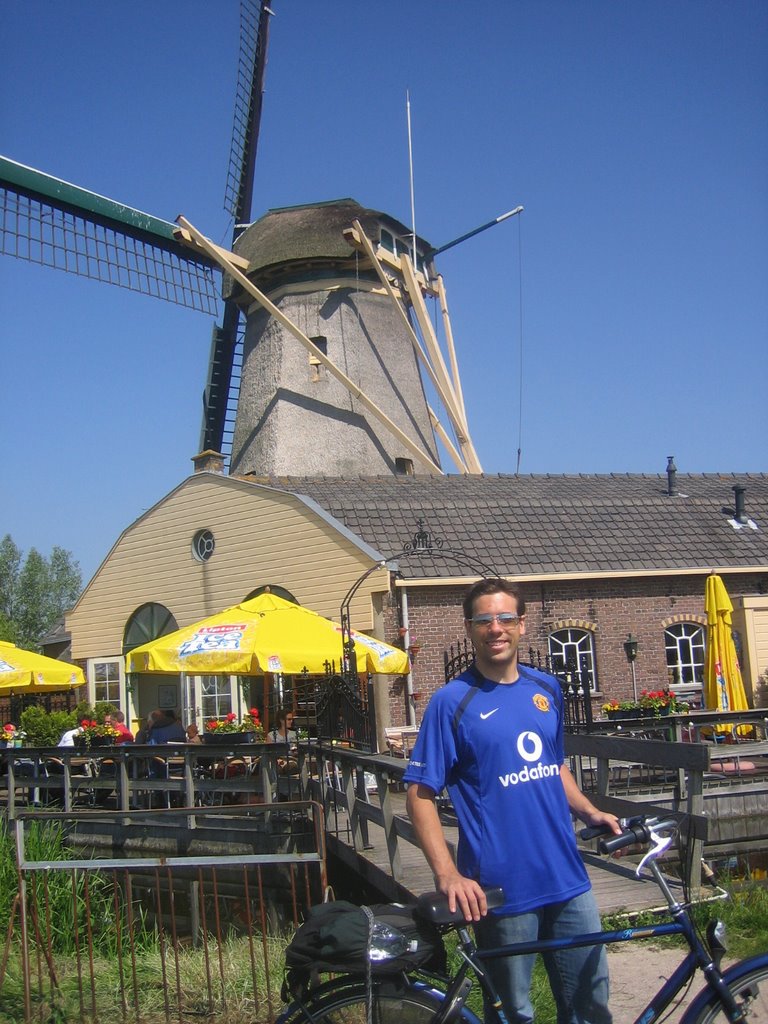
So an ATL buddy came into town this week en route to the World Cup in Germany. The plan was to bike around the region today. As the bike rental place is across town, we decided to try fitting one of us on the back of my bike bracket as many of the locals do.

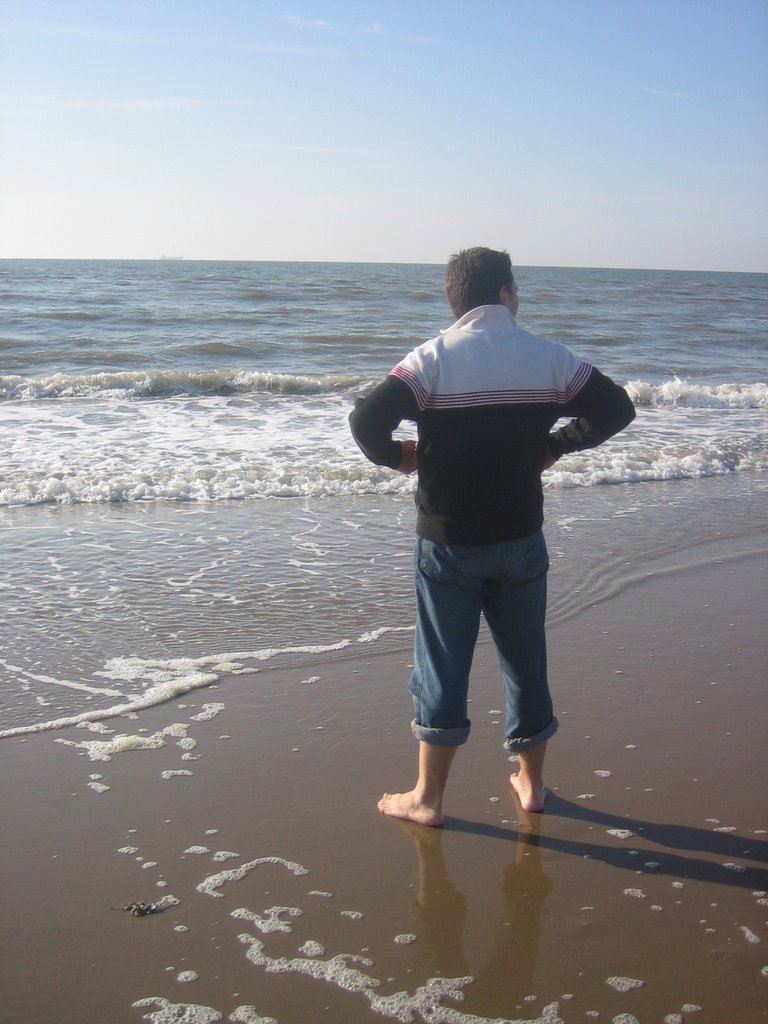
Whhrrrrmppp. Needless to say, we the bike was tacoed in the first turn. Bummer. The Pink Pony is down. See the evidence:


I tried to straighten it out, but the result was a little too jenky. So now we needed two bikes to rent. No problem. A couple of euros later we hit the well maintained, numerous bike paths that weave through every city here. (note: I did not say “hit the streets with the car traffic”) Within 15 minutes we were out of the downtown and among the windmills and farmland, biking for about 3 hours from town to town.


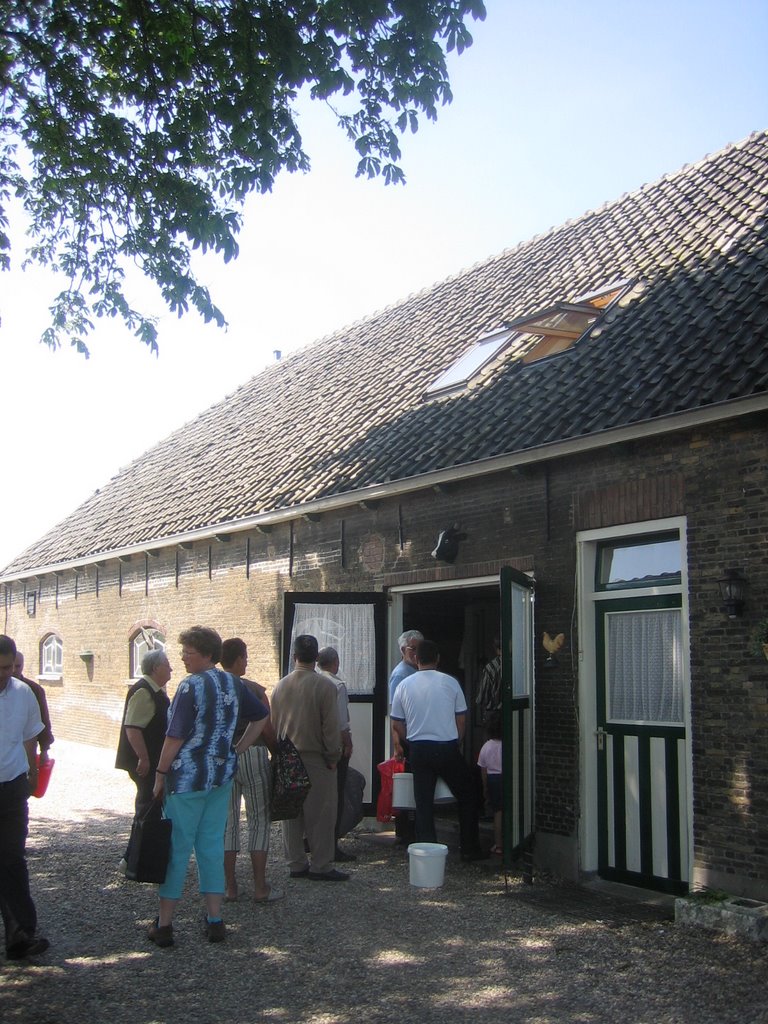
At 1pm on the way back in, this dairy in the next town over opened for the day, so I visited it for the first time. Where I live is a city of 90,000 people. It is not a farm town. There are cities of 400,000 people and 600,000 people both 8 miles from our downtown. The density and planning are so remarkable though, that choose any direction and within a few minutes you will be in woods or fields with no traffic and fresh air.

The dairy was awesome. There was this huge faucet coming out of this mysterious wall that added to our bounty: one liter of unpasteurized whole milk, one liter of unpasteurized buttermilk, a 300g hunk of aged gouda cheese, some homemade butter, and some homemade yogurt. There was a line out the door when we left. In twenty-five minutes the goods were back in my refrigerator.
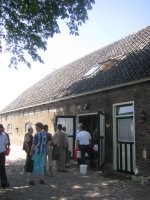

Ate lunch at home. Got some fresh baked bread and a smoked herring from the tri-weekly farmer’s market in the city, and washed them down with a frothy cold glass of milk. The milk was unbelievable. Like nothing I have ever tasted.


Set out for the late afternoon to evening ride. The next town over in the opposite direction has a series of houses with these crazy lawns. I wanted to both run through them and give this guy a trophy:


A couple of little towns later, hit the southern-most part of the trip. In this city of 15,000 they had all these roads blocked off for a jogging race - with spectators. And it was a Thursday.

Then biked 20km or so to the beach, weaving through cow pastures and greenhouses. Got to see the ferries arrive from England and got a little sunburned while lounging.


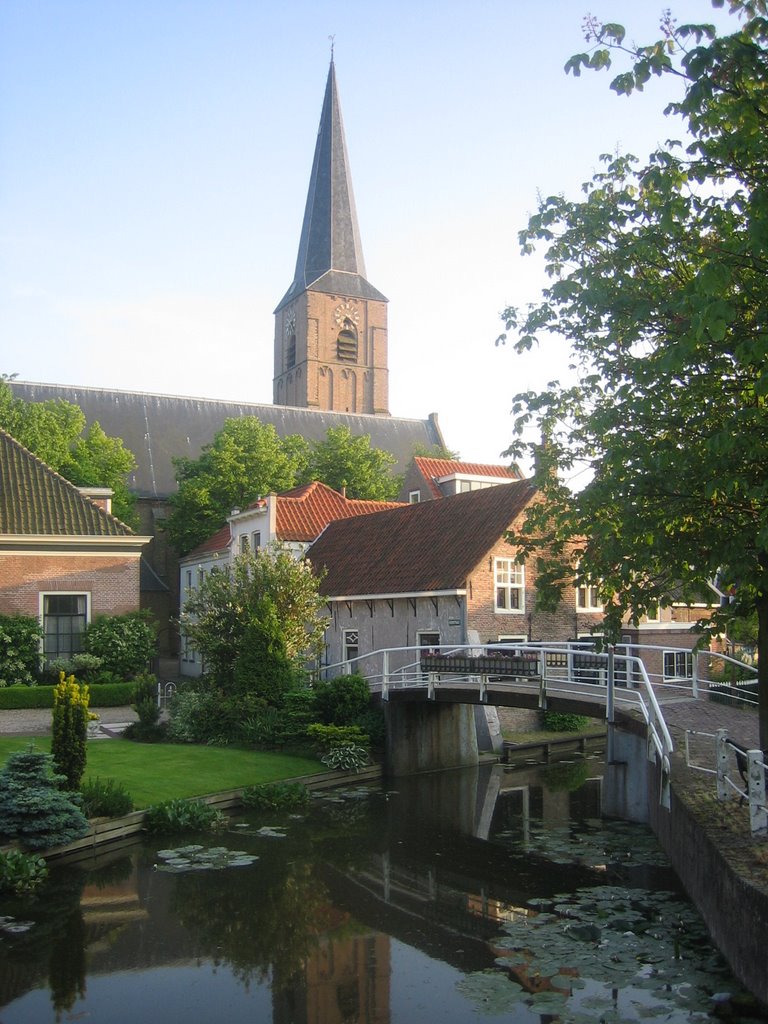
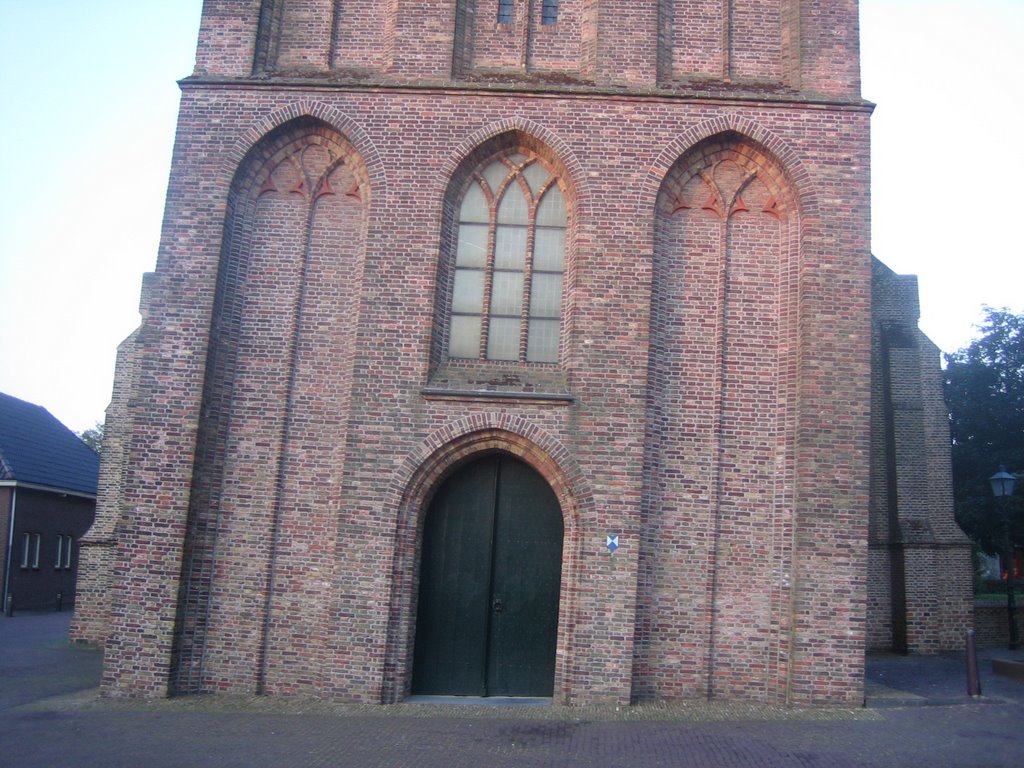
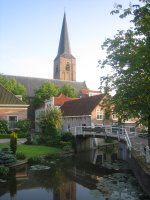
Two towns way from home at 9pm. Saw this church that was crazy slanted which must have been sinking as they built it. I’m not tilting my camera for this photo.
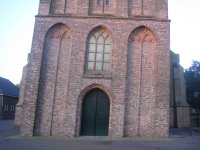

One town from home. Some locals were getting seated to their neighborhood pubs. One guy painted the outside of his entire bar in red, white, and blue stripes from roof to sidewalk. Another guy wrapped his whole building in orange.
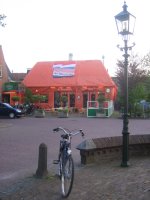

Returned the bike at 10:25pm. Watched the sunset between the spires of the cathedrals. Didn’t stay long though, as there were live performances on stages throughout the city at this time. The festival is called “mooi weer spelen” which translates into “beautiful weather on stage” – sort of a summer-is-here-now-so-we-can-hang-outside event. 11:30pm on a Thursday. I see hundreds and hundreds of people walking about. Unreal.

I just don’t understand how they get all these people from all over the country to travel here for these bi-monthly multi-day festivals. Especially since nearby cities do their own events as well. From a tented jazz festival and mardi gras celebration (with floats) during one month to a theatre festival and party-on-the-canals celebration during another month. It can make your head explode.

today’s events have taught me a few things:

- small cities can flourish, and explode with creativity and amenities, when both willing organizers and an interested public step up to make things happen

- connectivity of urban transit and population density is entirely related to quality of life issues and happiness for a good chunk of a region’s inhabitants

- biking around 70 or 80 kilometers in one day makes your butt hurt

- a glass of really cold milk, fresh from a cow, makes it feel better

Friday, June 02, 2006

interactive, searchable things to do in NEO

The other day I was wondering what to do in Youngstown on a Friday night. Do I check out a play at the Oakland, listen to some chamber music in the new DeYor Performing Arts Center, or watch some sports at the convocation center downtown? And maybe if I’m feeling adventurous, I can try and see something different – a visit to Alliance or nearby Kent to see something offered by the local universities.

I could look in a local paper, but it’s only focused on a small geographic section. I can’t see what’s going on at John Carroll or Hiram College without going to their individual websites.

I can go to a site that groups all the local performing arts agencies together such as city-arts.net. But when I go to the site, I have to go to each individual page for each venue. I’m lazy. That’s too much work and too much clicking with not enough comparison.

I want a website that will tell me within so many miles of my zip code, all the things I can go do in a certain proximity to my house. I want to know the cover or ticket price, and I want to find directions to the event.

What I want is something that is a mix between an online airplane ticket travel site such as Sidestep or Travelocity (which allows me to customize my searches) and the calendar function for macintosh computers (which allows me to see all my options in front of me, organized by the day of the week in color by genre).

When you load up Sidestep, you get all flights from one destination to another. You then exclude your options by price, time of flight, connections, etc. to narrow your search.

I want an online system that downloads everything to do in Northeast Ohio during the next week. Then I can exclude (depending on my mood) events that cost more than $10, sporting events, plays, mutli-week exhibitions, and events beyond a 40 mile distance from my house.

I think there are other sites out there such as citysearch, but do they perform good job of capturing the stuff to do in Northeast Ohio? I might be more willing to go to Akron and Warren for some entertainment if I knew what was going on in those cities. Alternately, all you other good people of Northeast Ohio might me more willing to come visit Youngstown if you knew all the interesting stuff we had going on here as of late. A system like this may push more and more of local venues to provide online ticket purchasing and a broader audience as well.

Maybe I would do more throughout all of Northeast Ohio if all the events could be found in one place. All I want is connectivity and convenience.

Wednesday, May 31, 2006

the reality of the realty

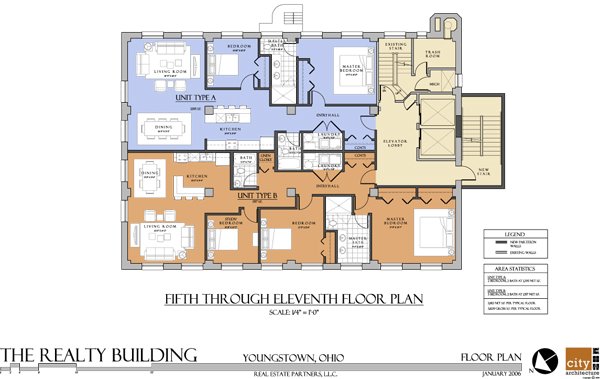
Special thanks to the posters at downtownyoungstown.com for putting up information about a soon-to-be rennovated building that will house apartments right in the heart of downtown. The three room apartments on the west side of the building should offer great views looking down the heart of Federal Street.

Here are some images of the Reality Tower as found on the website of the developer:


This is a great step in the building of a residential community in our downtown. Kudos to the private sector for stepping up and making an investment.

- - -

Can architecture, urban design and city planning help turn things around?

Steve Lott from the Cleveland Pain Dealer tackles this question in today's newspaper. You can read this thoughts here.

Perhaps the upcoming new building for the school of business on YSU's campus can have a "cutting-edge" design that impacts the pride of the residents of Youngstown. Should it be a beacon of light as you drive along interstate 680? Or should it be Youngstown's first "green building"? Or blend seemlesslessly into the surrounding neighborhood? Maybe it can be all three.

Tuesday, May 30, 2006

eminent domain debate is heating up

Sides are being taken on the eminent domain issue in Youngstown.

The debate is heating up over the proposed Lincoln-Rayen-Wood Development District project located between the YSU campus and the downtown.

I watched a city council meeting over the weekend (found here) which included statments from three people during the public comments section of the meeting. Speaking on behalf of property owners in the area were Colleen DiVito, owner of University Pizzeria & Italian Eatery; Marie LaCivita, owner of Youngstown Plant and Flower Inc; and Jim Villani, speaking in place of Joe Grenga who is owner of Grenga Machine & Welding Co. (There was also one additional gentleman whose name I did not get) If I got these names wrong, I apologize. It was a little hard to hear all the names via the internet stream.

One assertion was that they became aware of the project after the plans were designed. Another interesting concern/claim was if the city chooses to zone the area as "institutional" then the value of the propery dramatically falls. I don't know if this will happen in this case, or if this normally happens when re-zoning occurs, but one thing I do know is in January I ate a tasty pepperoni roll at the University Pizzeria place and used their wi-fi connection. The owners did a really nice job of rennovating the place and maintaining its upkeep. Depending on your view, the same cannot be said for other properties in the area, with the ouside of many of the properties adding to the vacant and uninhabited feel of the area.

Many will argue this last point is moot however. They contend it doesn't really matter how pretty you keep your property because essentially it's private property.

But Mr. Villani, owner of the Pig Iron Press (another longtime downtown establishment) on Phelps Street contends that the process of the Lincoln-Rayen-Wood Development was not perfect either. He claims that the process itself runs counter to the themes expoused by the Youngstown 2010 program. All of the three speakers did a nice job of expressing their points, but concerns about the problems with the process can spark a whole other debate.

Simply put, when people feel "shut-out" of the process, whether it is a justified or unjustified feeling, resentment builds. I have been involved in quite a few negotiations where the issue is one of mostly distrust between the stakeholders, instead of the plans on the table. In those cases, the trust issues needed to be worked out before a comprehensive solution can be brought forward. Mr. Villani suggested in his remarks that maybe all stakeholders need to start the process again to reach an optimal solution.

Maybe a plan can be developed which benefits the university with increased expansion, the city with increased connectivity, and the businesses with increased economic opportunities.

A new book came out in the city planning/urban design community named Designing Public Consensus which contains a case study highlighting Youngstown and the 2010 process. Written by Barbara Faga and her staff at EDAW, the book "presents examples of the interaction between architects, planners, landscape designers, engineers, and the public." Maybe there are tidbits in this book describing Youngstown that can be applied to the Wood-Rayen-Lincoln case.

A public meeting about the Wood-Rayen-Lincoln Development District will be held on Friday June 2nd at 2:30pm at the University Pizzeria. (133 Lincoln Avenue) Maybe people who attend this meeting will want to provide an synopsis of the meeting under the comments section of this blog posting. (subtle request for additional content)

(side note: EDAW's Atlanta offices can be found in the rennovated Biltmore building in the midtown neighborhood. It is a great example of a once down-and-out abandoned hotel filled with squatters that has become a beautiful building filled with restaurants, offices, and residences. I recommend Mickey's restaurant on the ground floor of the Biltmore, as their lunch menu is great and Mickey is a nice gal. I do not recommend the Toast restaurant on the back side of the building. And in case you are ever thirsty, there is club in the basement of the building that offers free martinis on Mondays.)

march 31 UPDATE It seems there was some type of press conference in front of city hall soon after I made this posting. Media reports of the press conference from Wednesday's papers can be seen here and here.

Monday, May 29, 2006

what creates a memory of a city?

On this weekend where we collectively consider memories, I did a quick search about "Youngstown" limited to other blogs websites. Here is a collection of interesting blogs that have been posted recently, adding to the collective memory of the region on the internet. Is the Mahoning Valley:

turning the corner? (link)

a role model for New Orleans? (link)

a penal colony? (link)

a source for magazine pin-ups? (link)

a good place for a night out? (link)

a teacher of life's lessons? (link)

All of these comments, added up over the years and spread from person to person, may form our image in the future.

Wednesday, May 24, 2006

between the rues in Montréal

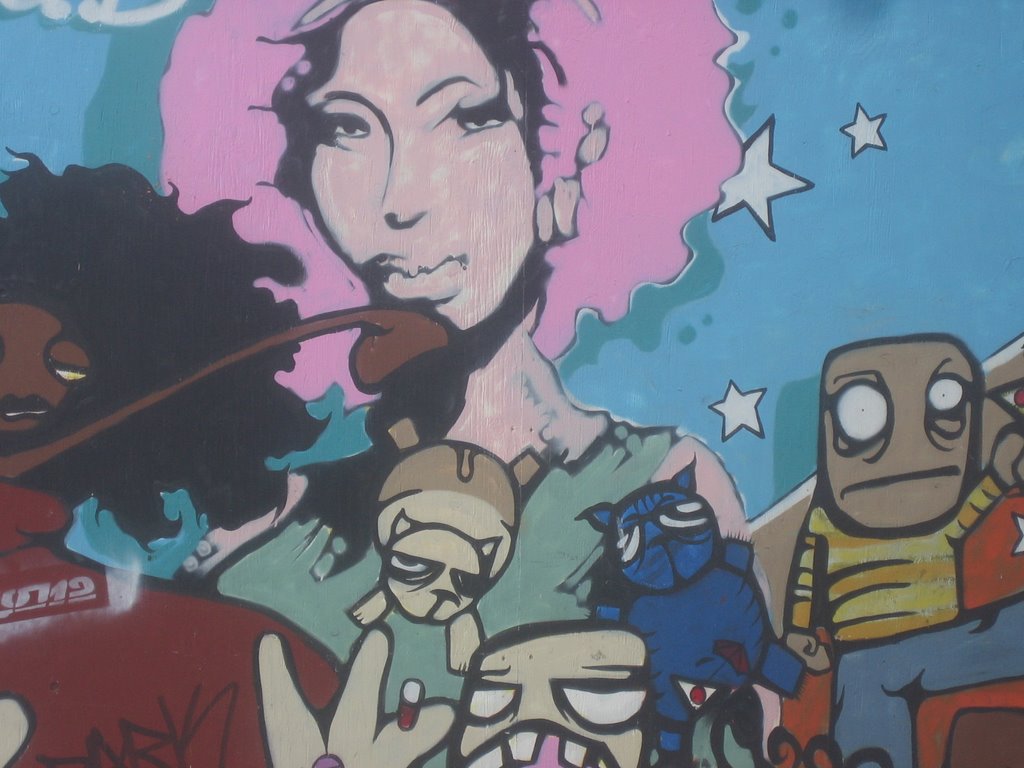
scattered throughout the Plateau neighborhood of Montréal

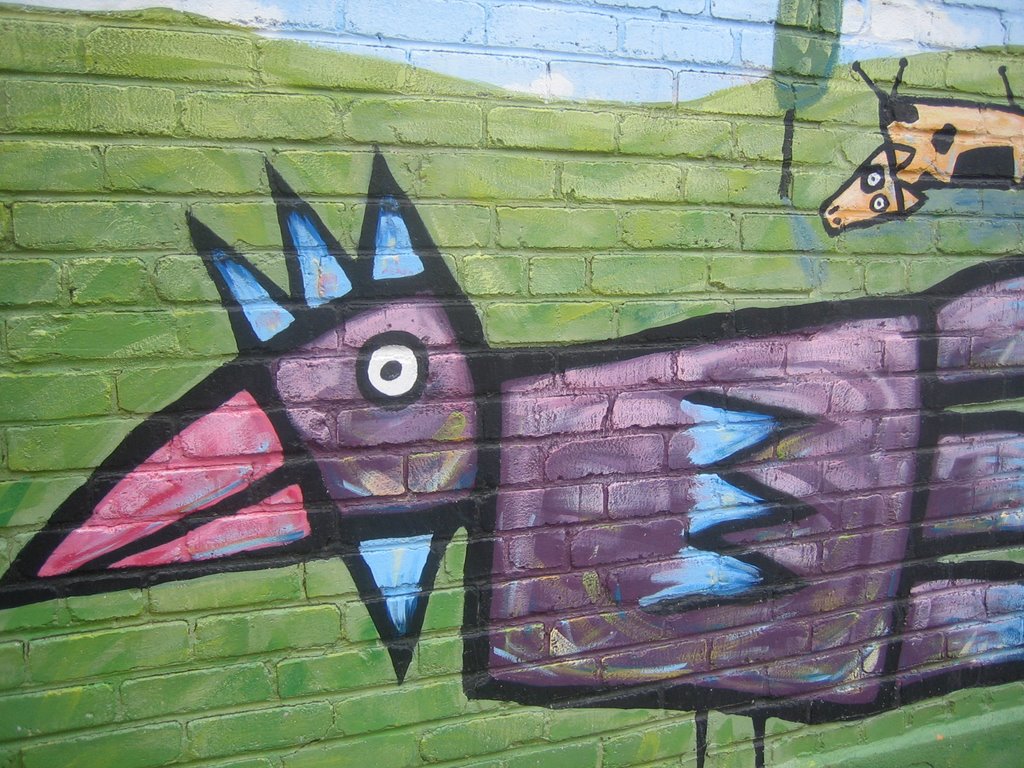
are murals

big and small

tucked

in the alleys

peaking around corners

waiting to be seen

and photographed

maybe some could hide in our downtown...

Monday, May 22, 2006

are there enough voices when making those choices?

I listened to another good podcast over the weekend that was held at the City Club (from December 2005). Speaking first was David Abbott, Director of the George Gund Foundation in Cleveland. He was followed by Carolyn Lukensmeyer, President of AmericaSpeaks in Washington DC, the organization administering the Voices & Choices forum for Northeast Ohio.

If you haven’t heard of Voices & Choices, it’s a pretty cool idea. A bunch of philanthropic and civic organizations pooled together their resources to form the “Fund for Our Economic Future”. The “Fund” has contributed to a variety of recent economic development efforts including local grants, economic benchmark reports, and the Voices & Choices forum.

There are a variety of approaches that communities can follow to create strategies for economic development. One is to hire outside consultants to analyze a region and make recommendations. Another angle is more of a “bottom-up” approach, which is to collect the opinions of the citizens and leaders of a region, collectively using their thoughts to identify the strengths of a region, and plot a course dedicated to the desires of the public. Voices & Choices takes the latter approach, and to date have successfully completed many interviews, and community and region-wide meetings to collect information. Some of their findings can be found here.

Abbott and Lukensmeyer do a good job in explaining Northeast Ohio’s changing role in an über-competitive global economy, as well as presenting the preliminary results in their search for consensus from public opinion. They espouse the Surowieckian (a new word I think) view that the best decisions are made by large and diverse groups.

But two components of their speech made me ponder possible gaps in the methodology:

The first statement that initiated contemplation is the often used and scary statistic that around fifty percent of the students in the region’s central urban school districts do not graduate from high school. My question is this: do high-school dropouts have a voice within Voices & Choices? Their agenda right now is entering a phase of interviews with thousands of individuals around the region. My only concern is that the civic-minded people who care about the region constitute the overwhelming majority of the interviewees. Perhaps a geographically diverse, age diverse, and racially diverse group is being interviewed – but maybe there are other sectors of diversity that can be reached out to as well.

When I send a mass email to my friends inviting them to participate in something, usually other college-educated twenty-somethings are the recipients. I’m not trying to be non-diverse, it’s just that's who compromises the majority of my social contacts so far in life. I just hope the extension of the social network chain in the Voices & Choices interview process is picking up the most diverse group possible.

The second statement that got my attention was the immense concentration of these interviews that will take place with other Northeast Ohioans. It made me wonder that if only residents of NEO are interviewed, this may also be a less diverse bunch. As an experiment, it would be interesting to use the alumni organizations of local universities (or another group) to initiate interviews with former residents of the area, and see if there is a difference in the responses. This idea may contrast with the concept that the best base for decision-making is the people that live here, but it can also be said that people who left may have an interesting point of view, including diverse reflections and suggestions. Now that they have left the area and seen outside of the region, they might have extremely valuable ideas.

Regardless of who you are, I’m sure the people at Voices & Choices would care about your opinions. (to my surprise they made a link to my two-month old blog off their own blog site). Click here to find out how to get involved and have your opinions heard.

Friday, May 19, 2006

the appearance of Federal Street in twenty years

This month’s YAEDA meeting included presentations by Dave Trabert of Channel 33 and Mayor Jay Williams. Mr. Trabert’s observations about how the community perceives itself were particularly interesting and insightful. The entire event can be seen here.

I singled out some of Jay Williams’ points from that night to frame a debate which I have written about in the past on other websites, but not particularly on my own blog. Mr. Williams made references to such things as “a different atmosphere when you come downtown” and “it’s great to see the trees illuminated” and “each destination downtown does not need hundreds of parking spaces right next to it”. I don’t really want to get in the habit of putting words in the Mayor’s mouth, but perhaps he would agree with the following statement: our downtown is an unique place in the Mahoning Valley that may benefit from landscaped boulevards not inundated with excessive parking.

I bring this up because of the possible changes that may happen to West Federal Street, using the same style that occurred along East Federal Street. I would like this blog posting to be a reservoir for public comments on the issue. Please add your opinion, either agreeing or disagreeing with later points.

First a caveat before my comments: I acknowledge you choose projects based upon your budgets, and not upon ideal conditions, and that the city can only afford certain things.

I have spoken to people who do urban planning in different cities across America who have come to Youngstown and looked at the remodeling of our main street. Four criticisms have always been repeated to me over and over again:
(a) Too much concrete in the most recent design.
(b) Diagonal parking may be convenient for businesses, but may be hard for vehicles to back out of and is an inefficient use of street space.
(c) The exposed electrical box in the central island looks out of place.
(d) The benches are small and not too practical nor comfortable.

And I would like to add an additional comment:
(e) Removing the trees and flowerbeds from the central median would detract from the beauty of the streetscape. Future plans for Wick Avenue and 5th Avenue show adding medians, which seems like a step in the opposite direction than what the university is planning.

But to be sure, additional factors such as handicapped accessibility, parking proximity to businesses, and new sidewalks are also factors that should impact the final design considerations.

But my fear is this: by not incorporating attractive design criteria into our remodeling efforts, we may have streetscape just a bit “off” that will not change for thirty years. By ripping out the trees, the existing brickwork, and the lampposts that currently occupy the space, and replacing them with mostly concrete and parking spaces, are we moving backward instead of forward? Can we have a Federal Street that incorporates both smart function and good design into the final product?

Wednesday, May 17, 2006

writings on the wall

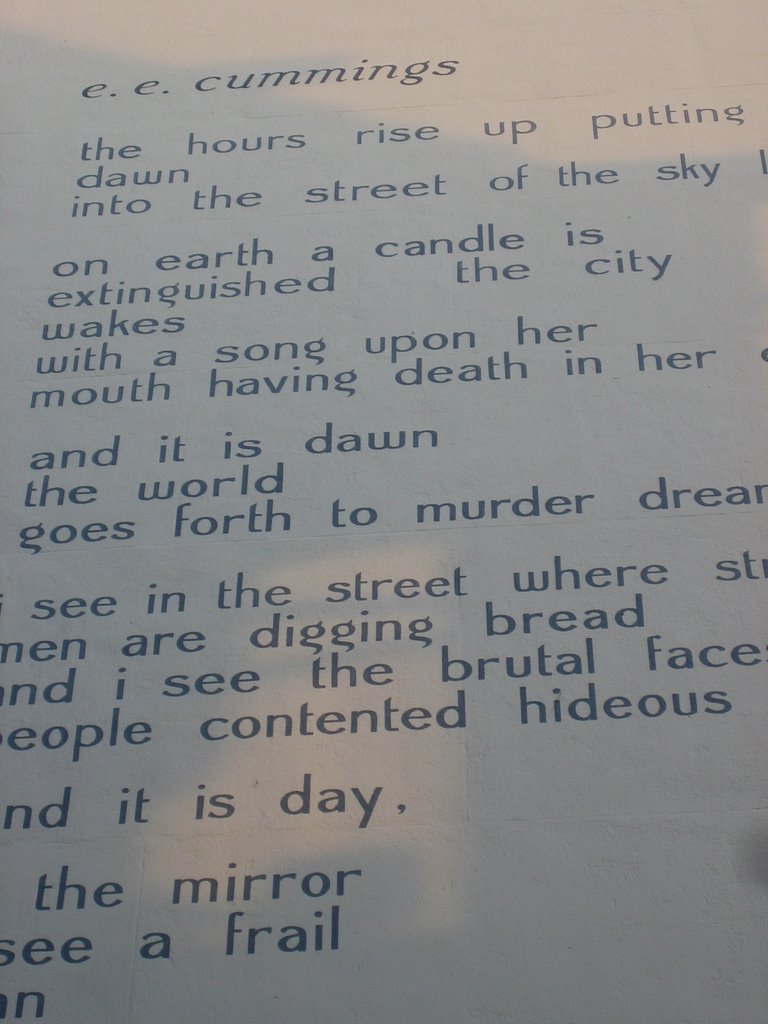
I took a bike ride the other day to the nearby town of Leiden. They have done interesting things with the facades of some of their buildings. Stretched before me next to one storefront was an enormous three-story poem by e e cummings.


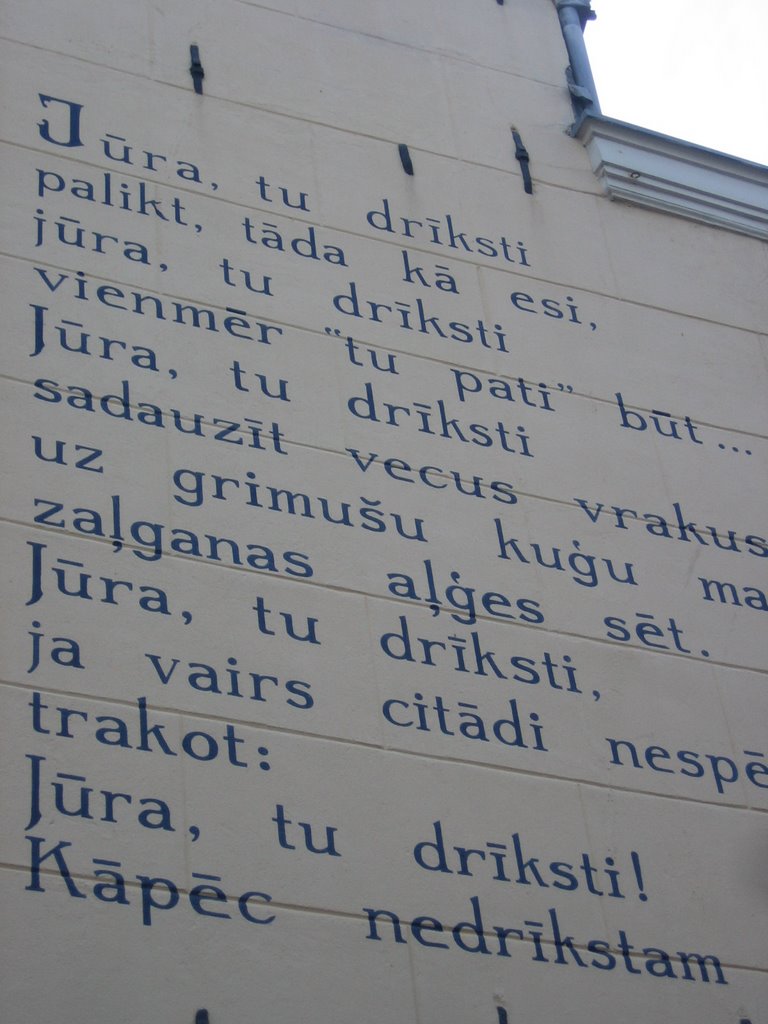
I thought this was really a simple, yet inventive way to add some art to an otherwise empty area. Here’s another one in Czech (?):


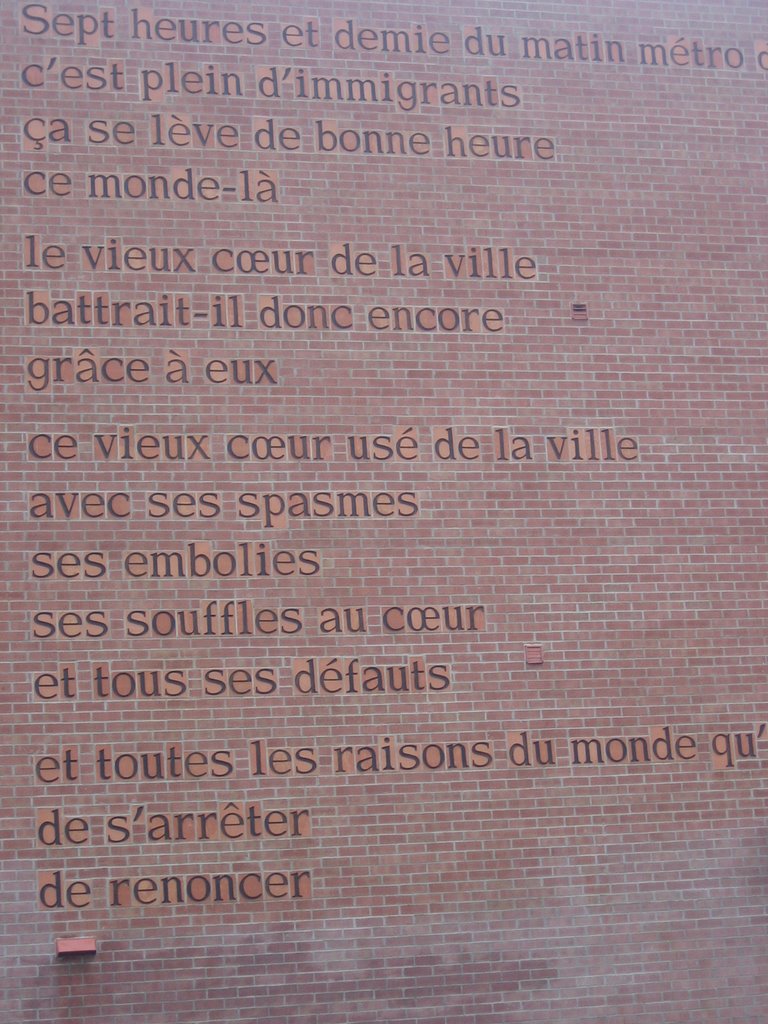
The other day outside the Mont-Royal metro stop in Montréal there was another such artwork, but this one was built into the brickwork of the building. Also very cool.


Would something like this be welcome in downtown Youngstown? Maybe in the courtyard of Cedar’s? or perhaps on the exposed brick in the parking lot next to the business incubator . . .

All we would need is a wall, some off-white paint, someone with steady hand that can cover some brickwork with two stories of words, and a poem to use.

We could hold a competition each year . . . one wall dedicated to an established poet, another to a local author, and another to a student from a local school district. Mix the young and the old. Mix poetry festivals with art downtown. The writings can change from year to year, creating an organic canvas that progresses through time.

Monday, May 15, 2006

let's start an International Neighbors Group in youngstown

A few weeks ago, I became a member of a little organization in town named the International Neighbors Group. It’s mainly composed of locals who are interested in meeting newcomers to town from other cultures. Some of the members meet every week for coffee and conversation; another bunch meets every week for crafts and cultural exchange. I’ve mainly stuck to monthly bigger events like road trips, and Dutch classes in volunteer’s homes. An individual is pretty much free to attend whatever one wants.

I’ve been especially happy with my Dutch classes recently, organized by a professor’s wife in the middle of the old town. Her house has stunning views of the four oldest churches and the main canal through town. Each week, five other students and myself sit around the table in her home as she prepares snacks and we talk in Dutch. Here is a picture of a recent snack, beschuit mit aardbei:


It’s basically a toasted piece of bread spread with butter, with sliced strawberries and grain sugar sprinkled on top. It’s a simple gesture to have snacks and tea in the afternoon, but one that has made a big impact to me, a virtual stranger in a new country. I think we should start this type of organization in Youngstown.

Who’s with me?

We tend to think of Youngstown State as a place attracting people only from the region, but that’s just not true. Many students from a variety of countries get their degrees here. This week when YSU has their spring commencement, they will present an honorary degree to the Undersecretary of Energy from Kuwait. His son will be graduating with a degree in chemical engineering.

It would be great to have an organization to welcome and assist new international students and immigrants in our community. Here are a few positive benefits this type of organization may provide:

- It’s helpful for arrivals from other countries to become oriented to our city and region. Small things such showing the location of ethnic markets, demonstrating how to use public transportation, and assisting newcomers with the paperwork that often comes with relocation may ease their transition to Youngstown.

- Organizing monthly events around the community, as well as around Northeastern Ohio and Western Pennsylvania, may present newcomers with a sense of the cultural things we Youngstowners find important, plus provide economic support for local attractions. Students especially may enjoy this if they don’t own a car.

- Teaching English to newcomers, their spouses, and their children may supplement their already existing language skills.

- If strong connections are made with students, they may be more interested in becoming future employees or entrepreneurs in the region, adding to the knowledge-based economy and diversity.

- If engaged students instead decide to return home, they might have a greater understanding of our nation’s and region’s traditions and values, making them good ambassadors to others never to visit this country.

- Treating our international friends well now may encourage future investment in local businesses, future support of local tourism, and future lifelong friendships.

Thursday, May 11, 2006

this is just to say

Thanks to Sunny for posing for this picture . . .


I have eaten
the plums
that were in
the icebox
and which
you were probably
saving for breakfast
Forgive me
they were delicious
so sweet
and so cold

"this is just to say"
by William Carlos Williams

Wednesday, May 10, 2006

City Club strikes again

No sooner than I created this post about the growing movement to insert youth into the board of directors for community organizations, did another fine program from the City Club find its way into my iTunes.

Today's installement was by Gene Krebs, who is the State Director of Greater Ohio, an organization committed to "promoting — through research, public education and grassroots advocacy — public policy to grow our economy and improve our quality of life through intelligent land use." Gene addressed the issue of eminent domain, especially in the sense of what causes these land use struggles to be created in the first place. You can (and should) listen to the entire hour-long presentation here.

a couple of interesting statistics he cited in his presentation:

In the past six years in Ohio . . .
- the poverty rate has increased from 12% to 17% of the population.
- the unemployment rate has increased from 4.3% to 6%
- number of people on Medicade has increased 45%
- number of people using food stamps has increased 29%
- has become the number one state in mortgage foreclosures.

Besides these statistics, he also had two lines in his speech which screamed out to me:

..."they [the growing knowledge-based employee set] carry their manufacturing plants on their head - these are their smokestacks. And they will locate their manufacturing plant where there are good shops, high-speed internet access, in a walkable community that enables a certain quality of life."

"Ohio is still focused on 1970s-style smokestack chasing instead of the strategic marketing of its strengths and pursuit of sustainable economic activity. Now our state and local devleopment agencies act as real estate agents for companies searching for areas with cheaper taxes"

Do you agree with him?

I believe the eminent domain topic is heating up in Youngstown, especially with the issue of the university planning to connect more to the downtown, and the existing proposal to acquire property to create an extension of Hazel Street through mostly blighted, but occasionally inhabited property.

Gene makes the astute remark that politicians hate using the eminent domain option and follows it up with some examples. He continues to elaborate more in his speech on some solutions. Click here to see their well-conceived policy agenda.

Cool. I was really excited to discover this organization today. (Did you know they have a Mahoning Valley representative?) I still want to learn more about this organization. Their spring 2006 briefing can be found here. Maybe you can read it with me, and provide some ideas for future posts on this website.

RECENT UPDATE: Just found this whilel surfing their site: Gene Krebs will be in Youngstown NEXT WEEK on May 18th giving a presentation at the Fellows Riverside Gardens at Milk Creek Park. The event will be a lunch at noon ($10), with policy discussions and breakout sessions to follow. Mayor Jay Williams will also be a presenter. For more information and to register, click here.

Tuesday, May 09, 2006

gay rights and economic development

There is continuing debate in the state of Ohio to create laws to define the rights of homosexual couples to engage in such actions such as the adoption children and the ability to marry. Regardless of where you fall on this issue, this response (which I truncated) from the FAF's blog (thanks to the link from George at Brewed Fresh Daily) really caught my attention:

[after describing recent proposals to limit gay rights]

Realistically, I know I'll be living here for at least another year, until I've completed my graduate program. And during that time I'll be reading and fuming about further ways Ohio will tell me to go f**k myself.

But after? I'm finally realizing I have to get out. Another state? Another country? I don't know yet.

But there has to be a place that will value what I offer. That won't try to beat me down repeatedly. That won't tell me that I'm the cause of society's ills. That I'm second class. That I'm disgusting.

People will say I'm letting them win if I leave. They'll tell me that I need to stand up and fight to take back this state. But I don't see that I will. I don't see that I can.

Wow. Strong words.

I think we can also look at this issue as not just a religious one, or a social norms one, or a social justice one, but from an economic development perspective as well.

As an exercise, I'm going to choose the often-debated statistic that 2% of the population is gay. Different people will tell you different values on this statistic, but just scale up the numbers if you want to recalculate the following:

According to the Department of Labor Statistics there are 5.3 million workers employed in Ohio. If 2% are homosexual, that means there are about 100,000 workers of this orientation that actively contribute to the economy of the state of Ohio - who work across a spectrum of industries, including knowledge-based jobs critical to Ohio's future.

It's a problem if 100,000 people in this state believe who currently live here believe they will be accepted somewhere else, and are willing to leave to find a place more accepting of who they are.

But I don't think this argument can be limited to whatever percentage of the population is gay. Many, many, many more people WANT to live in a society where diversity and their neighbors are accepted, and these people are an even greater chunk of the population. They want an inclusive Ohio, and when people complain about the "brain drain" in this state they need to realize that for many people the social environment is just as important as the economic environment when they choose to live here. An anti-gay stance by state legislators chases away straight people too.

Some may feel it cheapens the debate to take a social rights issue and make it a dollars-and-cents one. But I believe if you really care about the future of Ohio's economy, you should take steps to make Ohio attractive to all people, and not just a select few.

Monday, May 08, 2006

are there seats at the table for younger people?

The City Club of Cleveland has been posting podcasts of their past presentations over the past few weeks, and one was downloaded into my iTunes yesterday which particularly caught my attention. It was by Rebecca Ryan, who is the founder of Next Generation consulting. She did some consulting work for many midwestern cities, including Akron. The entire presentation can be listened to by clicking on this link.

One of her central talking points is the necessity for a community to accept younger people on their civic orgnization's boards of trustees. She cited how Akron recently added four seats on board of their Chamber of Commerce, in the attempt to engage younger people and entrepreneurs in the area. A recent posting on this blog reviewed academic research that theorized one reason for the stuggles of Youngstown is that the leadership of the civic organizations throughout the years have been a fairly homogeneous bunch.

Should the boards of Youngstown-based organizations take this idea to heart?

My question is this: what number of the board of trustees of the following organizations are held by people younger than 50 years old?

- The Butler Institute of American Art
- The United Way of Mahoning Valley
- The Youngstown Symphony Society
- The Youngstown-Warren Regional Chamber
- Wick Neighbors Inc.
- The Public Library of Youngstown and Mahoning County

The reason I chose these institutions is that they will be important drivers for the future of Youngstown. I have no clue who comprises their executive boards and leadership and I am not critizing them, but it may be an interesting exercise for these organizations to analyze their own leadership. maybe the best leaders are those who have been in the Valley for a while and with the most connections and experience. But maybe their future success will depend on the engagement of younger generations and where they receive their ideas for the future.

Wednesday, May 03, 2006

new life for the paramount?

The Youngstown Vindicator just posted this story a few minutes ago about an Illiniois company purchasing the Paramount Theater along Federal Street. I must admit I was extremely excited to hear the news about the potential rebirth of this building, especially counter to other proposals to rip it down and replace it with a shiny new parking lot. We will now wait and see if these ideas become reality. Existing pictures of the interior can be found here.

Kudos to those who continue to see value in both historic structures and the potential for adaptive reuse of buildings.

A previous post on this blog discussed a recent trip to see a movie in a theatre that had a bar inside. Perhaps this sort of concept can make the whole "art-indy-film" draw an even more profitable venture. I also believe that Youngstown lacks a cool music venue that can fit 200-400 people comfortably for some rock concerts. One of my favorite haunts in the city of Atlanta is the Variety Playhouse which has really great almost-popular bands playing there every week. There, owners took an old movie house, added some speakers, placed folding chairs and tables around the dance floor, and built a bar that serves local brews from the area. (a recent posting contained at downtownyoungstown.com has info about the B&O brewery opening back up)

Can this same type of concept work in Youngstown? As anything else, the support for events and the capital to invest must exist to make this type of place a success. But we are moving in the right direction.