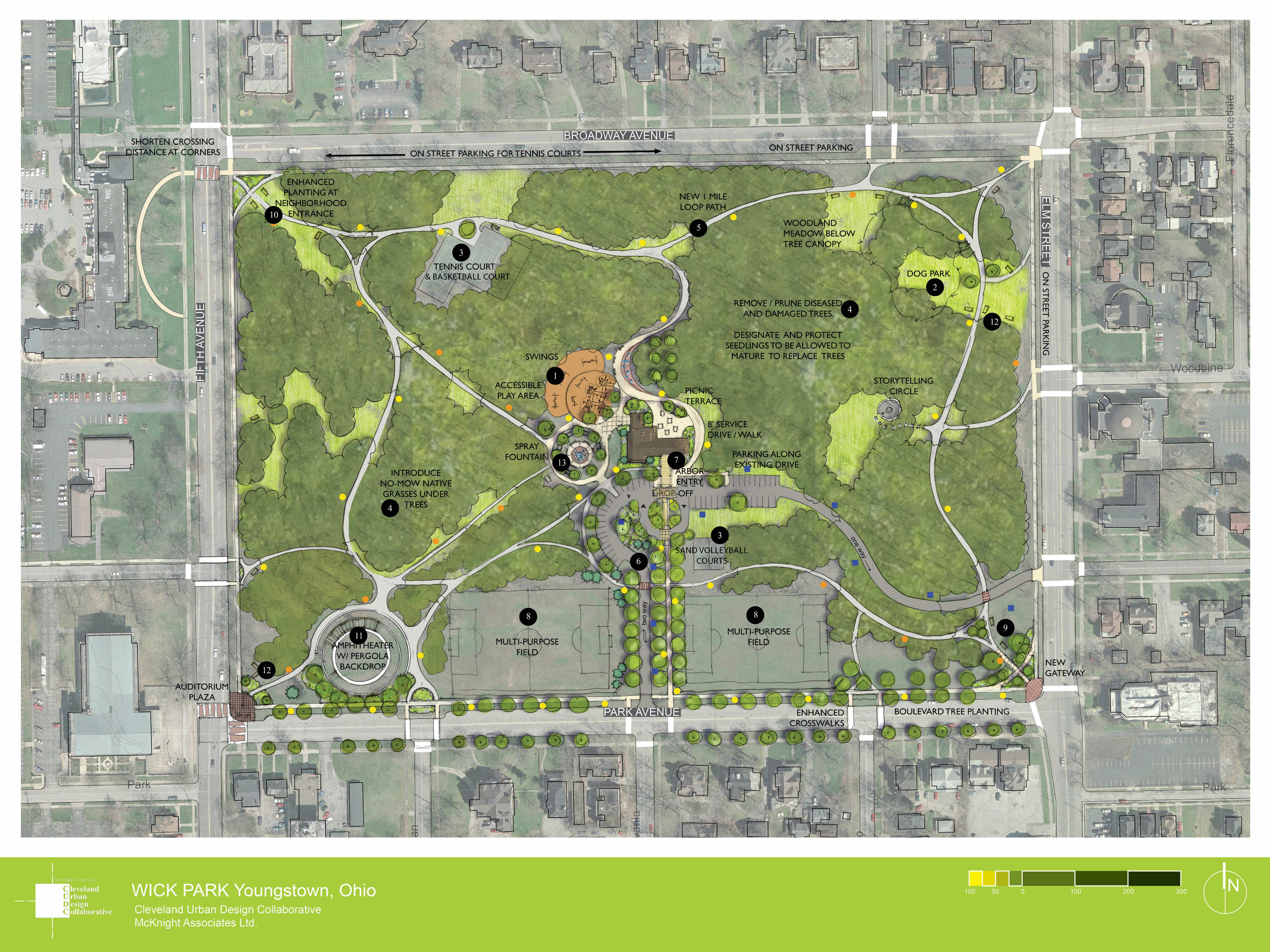
After a year-long effort into Youngstown-style "open source community development", a crucial component of one neighborhood's revitalization is now available - for public comment on what projects to tackle first.
The End of the Tunnel is one of those downtown places not known to most locals.
In fact, even if they have heard of the space, many could not guide you to its subterranean doors in the basement of the City Center One building.
Long known for being a hangout for the after-work crowd and a good place for a quick lunch, the former Martini's had its official grand opening last friday.
here's short video of the vibe inside:
To get to this place, you need to either take the underground tunnels from the parking structure where Cafe Cimmento is located to north of federal street, or you can enter the City Center One building and descend into the basement.
the new logo for the place is very nicely designed.
And some unique photos I've never seen before grace the hallways. Most are black and white shots with a singular color element.
The one above shows an old Schwebel's truck in front of the main train station. The one below shows the Youngstown Sanitary Milk Company.
remember, think "tunnel" and go to the end . . .
. . . and there you'll find the End of the Tunnel.
it's exciting to see people following their dreams, especially entrepreneurial ones.
it's also exciting to witness additional investment in downtown youngstown, especially from the private sector.
a great example with a very cool name is the new place on the corner of Phelps and Federal - William Leonard's Extraordinary Gentlemen.
(check out the art deco carvings on the Peggy Ann building)
William Leonard's Extraordinary Gentlemen is an oasis of sorts - a concept catching hold in a few cities across america - as it is a premiere full-service salon and spa exclusively for men.
Proprietor Lisa Reali explained the concept while she was providing a tour of the renovated space: - you need a haircut at a moderate price, walk right in; - you need a massage during a stressful week, you make an appointment; - you want to hang out and watch some sports with your buddies, game on; - you need a manicure before that job interview, they'll help you out; - you need some foot care away from all the ladies, this place is for you.
Monday's Sound of Ideas program on 90.3 WCPN featured a tale of two cities, with representatives from both Cleveland and Pittsburgh discussing recent media perceptions on the relative progression of Pittsburgh vs. the relative calamity in Cleveland.
A must-listen for anyone interested in the Tech Belt. audio here.
One might summarize the discussion in the program as such: technology-based economic development is a long-term process, that when done right, yields long-term growth. Pittsburgh, with state support, made investments two decades ago that are now paying off. Cleveland has made similar investments in the last five years.
This overt generalization though does raise this question:
If Pittsburgh began this region-wide push xxx years ago, and Cleveland began this region-wide push xxx years ago, when will the Mahoning Valley begin this push?
We are seeing signs of life out there in the Valley.
An incubator success here, an earmark for research there, a nice speech here, but can this push be larger from the region as a whole?
a full-court press if you will?
- how does the Youngstown region market itself from a tech perspective? - how do Youngstown tech companies communicate their needs and share information? - how can local tech entrepreneurs access funds to develop a market assessment or proof of concept? - who is an advocate for the Youngstown tech community with ODOD and the Third Frontier in Columbus? - who is coordinating attempts to acquire stimulus funds for regional economic development projects?
Are these real gaps, or minuscule ones?
perhaps what is needed is an organizing collaborative for the local tech community...
Last week, the National Science Foundation (NSF) released its most recent statistical tables for research and development (R&D) expenditures in science and engineering (S&E) at universities and colleges across the country.
This data allows us to peer into funding trends at local universities up to fiscal year 2007.
Funding to universities for research can come from a variety of sources: the federal government, state and local governments, private companies and industry, foundations, and the universities themselves.
Here then is a chart illustrating research funding in science and engineering at Youngstown St. University from 2000 to 2007.
The dollar values are in thousands, and displayed are trends for all combined sources of S&E R&D funds (usually the top line), the portion from the federal government (middle), and the portion from industry (lowest line):
The graph shows R&D funding at YSU in recent years had peaked back in 2004 at $1.8 million, dropping by 2007 to almost $600,000. Federal funding too experienced this growth and fall, while funding from companies consistently hovers around or less than $100,000.
Now looking at our friends at Cleveland St. University, the overall trend in S&E R&D funding on that campus is definitely upward. Total funding peaked as well in 2004, at $16.9 million, which is about 10 times that of YSU.
Next up is the University of Akron, which has experienced dramatic increases under the tenure of President Luis Proenza. The last six years of total S&E R&D funding on the chart has U of A in the $27 to $29 million range consistently.
We can also compare trends for the universities side-by-side:
The data for YSU also allows us to delve into the subjects being funded. For example, out of the total $611,000 attained by the university in 2007, according to the NSF:
- $9,000 went to the environmental sciences - $156,000 went to the life sciences - $7,000 went to the math/computer sciences - $375,000 went to the physical sciences (chemistry, physics) - $1,000 (approx) went to psychology, and - $59,000 went to engineering
In 2007, the state of Ohio was ranked 7th in the nation with $1.81 billion in science and engineering research funding to universities. More impressively, Ohio ranked fourth in the percent increase (42.5 percent) in this amount for the five-year period from FY03 to FY07.
Looking only at total funding in 2007 to public universities in the state: - $720 million at Ohio State - $376 million at Univ. of Cincinnati - $52.4 million at Univ. of Toledo - $49.7 million at Wright State - $38.7 million at Ohio Univ. - $27.1 million at Univ. of Akron - $23.7 million at Miami Univ. - $19.0 million at Kent State - $16.8 million at Air Force Inst. of Tech. - $15.9 million at Cleveland State - $9.1 million at Bowling Green - $5.0 million at NEOUCOM - $2.3 million at Central State - and $611,000 at YSU
To be sure, tracking research expenditures is only one simple component of measuring the overall complex impact of a university. In addition to economic development, a university improves the workforce, quality of life, community service opportunities, and the arts, among others.
Reasons for lower relative research rankings over the decades at YSU to other Ohio public universities can be a result of several factors:
- only two programs are currently offered at the PhD level (none in STEM) - historically smaller science and engineering masters degree programs - fewer connections to existing industries from earlier decades - smaller metro and university size - lack of metro-wide economic development strategy and implementation - poor governmental leadership at federal level prior to this decade However, that's the past - and time to move to the future.
According to this recent video taken by the Business-Journal of YSU President David Sweet, the mission of university has been updated, and has undergone a reclassification by the state as an urban research university:
In closing, what will the future hold?
Some important steps have been taken in the past few years, which may impact YSU's future opportunities to grow their R&D expenditures: - the establishment of a STEM (science, technology, engineering, mathematics) College as one of the university's academic units, along with its new leadership;
- the continued growth of local tech companies in the downtown;
- additional engagement with institutions in Pittsburgh, Akron, and Cleveland;
- enhanced partnerships with regional companies;
- leadership at the federal level that understands real economic development;
- the potential for state and regional leaders, and local citizens, to get on this train and not sit on the sidelines.
A fun little story in Saturday's Youngstown Vindicator on using three-dimensional high-speed laser scanners (more on that in a sec) to acoustically model downtown's Ford Recital Hall contained an important fact:
"In the past few years, M-7 has been doing industrial scanning in a partnership with [Mr. Eike] Thiele. The German engineer now is creating a North American unit of his consulting business and basing it at M-7’s plant in the Ohio Works Industrial Park. His new company is affiliated with the Youngstown Business Incubator."
So now we can now add one more company affiliated with the YBI to be operating in downtown youngstown.
and this company has German roots.
Willkommen to Youngstown!
A while back YBI-based Turning Technologies opened their first international office in London, and that company's knowledge of international markets is being spread to other growing firms at the YBI.
Global companies. Global markets. Global Youngstown.
- - -
Back to acoustics.
The previously mentioned story (with accompanying video here) delves into a project originating from a backyard dinner between two neighbors - the president of M-7 Technologies and a violin professor at YSU's Dana School of Music.
Using the scanning equipment, an exact computer model of the interior space of Ford Recital Hall will be made. Afterwards:
"The next step will be to measure the acoustics of the hall and convert that to a digital file as well. Then, high-powered computers will play the digital music inside the digital model of the hall. Organizers will perform virtual experiments by adding sound-absorbing panels to look for ways to improve the hall’s performance."
And then, perhaps this method of analysis can be used at performance spaces around the world.
more Rickles with Reagan, now as President at the inaugural.
and some news, it will be the Eastern Gateway Community College.
"A $1.9 million federal grant will help launch the Eastern Gateway Community College that will serve this region of eastern Ohio beginning this fall.
The name of the joint educational effort that will span Mahoning, Trumbull, Columbiana and Jefferson counties has been chosen, and the first classes will be a program that will enable licensed practical nurses to earn an associate degree in registered nursing, said Nathan Ritchey, Youngstown State University’s liaison on the community college project."
While some talk of regionalism is just talk, some chatter actually leads to action.
Take the case of the newly created Mahoning River Corridor Initiative (MRCI). Instead of just the river cities of Youngstown, Campbell, Lowellville and Struthers working together to take former steel mill properties and return them to productive usage, the concept has now been extended to the 9 cities along the 31 mile stretch of the Mahoning River in Ohio that share similar concerns.
MRCI's goals are to target the brownfields along the river for economic redevelopment projects, preservation, and the development of shared recreational areas.
Castlo Industrial Park is a good example of this cooperation, as it has refurbished many of the brick buildings (totaling 563,000 sq ft) at the Youngstown Sheet & Tube's Struthers Works since Castlo was created back in 1978.
At MRCI's meeting on Monday, the organization committed to working on the development of an "east-west rail service would link the Mahoning Valley to Cleveland and Pittsburgh as well as major metropolitan areas such as Chicago and New York.", estimated to be a $30 million project.
According to the Business-Journal's story:
"Proposed projects include construction of roads and bridges that would provide better access to brownfield sites in Struthers and Campbell, infrastructure improvements to the Castlo Industrial Park, environmental assessment and clean up of brownfield sites in McDonald, Girard, Newton Falls and Lowellville, construction of bike trails in Youngstown, Warren and Niles, and establishment of a wetlands bank."
Another story in the Business-Journal chronicles how the 1st in nation Interstate Workforce Region got off the ground.
"The collaborative effort began about a year ago, says Bert Cene, director of the Mahoning and Columbiana Training Association, as the counties looked at how to better link economic and work-force development resources. The designation allows for joint planning, sharing of information and coordination of services among the three counties in northeastern Ohio and the two in western Pennsylvania.
In February 2008, the U.S. Department of Labor awarded the region a $250,000 grant to further the effort. The money funded development of a regional system to provide rapid-response services to dislocated workers, establish a coordinated industry-specific outreach, align educational institutions and training programs to meet the needs of employers, and to seek new employers for the region.
The money also was used to identify strengths and weaknesses of the area and to identify commonalities and obstacles to cooperation, says William Turner, Trumbull County One-Stop administrator.
Right now, the way workforce development dollars come down the channels, Ohio dollars must stay in Ohio and the same holds true for Pennsylvania. “We have many employers who have companies in Pennsylvania and in Ohio, yet we can’t use our workforce dollars to train them in Ohio,” she says. “We’re hoping this takes away those kinds of barriers.”
The federal government likes to see these kinds of regional groups, Garraty says, and such collaboratives are “going to be at the front of the line, at least when it comes to workforce development grants.”
The formal plan is to be presented to stakeholders in the region at a summit planned for April 23 in Sharon, Pa. That plan, which is still being crafted, will include initiatives to jointly market the region for development outside the area."
A print and online subscription to the Business-Journal - some of the best money I have ever spent.
First off - a ginormous, gracious, and appreciative thanks to A.K., who until a few days ago was the Chief City Planner of the city of Youngstown.
With his guidance, the APA award-winning Youngstown 2010 plan was shepherded from concept to reality.
Best of luck to him and his family as they are moving onto future endeavors.
You've done a lot for this city over the years.
- - -
But with these big shoes to fill, comes an important choice for the city's administration. Who will fill this now-open position with the city?
The Youngstown 2010 plan has reached much international attention and acclaim. People around the country, and the world, are currently watching Youngstown to see if the 2010 plan spurs tangible process, or simply becomes a paper tiger gathering dust.
Without allocating sufficient resources to implement aspects of the 2010 plan, the citizenry's support of the plan itself and the leaders behind it may be forever damaged.
And that's why this moment presents such an golden opportunity to bring extraordinary talent, currently residing outside of the Mahoning Valley, into Youngstown.
- - -
Sure, times are tight for budgets locally and across the globe.
However with the economy's downturn and a current over-supply of talent in the national market for planners, there are many qualified city planners who have participated in projects and developed knowledge away from Youngstown.
And, these planners can probably be recruited to Youngstown (now at a reduced price) to make their mark on the city.
- - -
The global exposure of the Youngstown 2010 plan; the availability of experienced talent; the possibility for getting a lotta bang for the city's buck; and the potential to attract external knowledge - all feed together to make this a GOLDEN opportunity for the city's future.
Kravitz Deli is attempting to sell 2,000 lbs of corned beef on Tuesday.
Last St. Patrick's Day they sold 1,200 pounds, and are gunning for the record.
Kravitz' has been a Youngstown institution since 1939, and is celebrating its 70th anniversary on St. Patty's Day as well.
According to Rose Kravitz, now 93 years old and quality control manager extraordinare, (last month, she advised me not to mail their cookies to England because they don't use preservatives and the freshness would not survive the trip):
“The Northside has always been the melting pot of Youngstown. Our customers are Jewish, African-American, Italian, Irish, Slovak, Greek...You name it,” she proudly boasts. “But here, on St. Patrick’s Day, we’re all Irish!”
so besides Tuesday's festivities, Kravitz Deli will have a tent featuring live music, extra large corned beef sandwiches, rubens, northsiders, corned beef and cabbage dinners, and of course, beer.
Kravitz always has free wi-fi.
Kravitz has bits of matzoh in their wedding soup.
Kravitz has been having live local music on Thursday nights at 6:30pm.
Kravitz now has a sandwich named after a blogger, "The Return of Philly the Kidd Defends Youngstown":
Kravitz just fulfilled my hamentashen quota (10 varieties) for the month:
Going to work at the building next to the Federal Reserve on Constitution Avenue, I was always curious on just what the heck was going on inside their building.
Tonight's 60 minutes had a neat glimpse into the Fed.
I tuned into blacksquirrelradio on Friday to listen to The Zou live in Kent and at the *exact* moment the streaming live video kicked on, the lead singer sang the the words:
"god I'd never thought I'd feel so good to be alive . . . in Youngstown"
sitting in a chair area codes away, it brought a small smile to my face.
even when your van breaks down in Camelsburg, Kentucky,
shared music can tie a place together.
Like 60,000 in a football stadium singing "Country Roads". Or at an Ohio wedding singing "Hang on Sloopy". Or the folks in Tennessee singing "Rocky Top" at the the top of their lungs.
it circles the globe:
here's another great example, with the Pittsburgh Diaspora singing "Won't You Be My Neighbor": (remember to wear your sweaters on March 20th)
so what's an anthem for Youngstown?
when one does a search in YouTube for "Youngstown", most of first links are to Bruce Springsteen performances.
Or consider how another local band feels in their song, F**k you, Bruce Springsteen
"Here in Youngstown, here in Youngstown. Well f**k you, Bruce Springsteen, we ain't sinking down, we're just living here in Youngstown. We will make it ourselves, we will make this town great, yeah yeah, Youngstown is our home."
so as more bands from Youngstown go on to do things like win the best show award at SXSW, what was only a local music scene now extends and radiates outward, due to the talents of the performers.
btw, if you are interested in leaving Chattanooga, Valdosta, Athens [ga], or Tampa, the Zou might have space in their van since they'll be there in a few days.
This blog first visited the work of Prof. Greg Moring almost two years ago in a tour offered by the Center for Working Class Studies of labor art in the city.
During the tour, attendees learned about Moring's techniques for using bent steel to tell a story.
A photo gallery showing him working on his latest project is now on display at Tod Hall on campus. The Elm Street Gates will be based around Lincoln Avenue and Elm Street, and will weave the story of the past and the future of Youngstown. Check out a news video here:
From YSU's Dept. of Marketing and Communications:
“The two panels on the left represent the hard work, commitment and sacrifice of Youngstown’s past generations that laid the enduring foundation needed for the renewal and transformation of a greater Youngstown through the power of education,” said Moring. Additionally, the large gate’s right hand side symbolizes the promising future that education can provide to students."
"When completed, [mid 2010] the 25–foot wide, 16–foot tall gates, featuring a smaller set of functional, built–in gates, will create a formal entrance to the university."
Another similar project on a smaller scale can be found on Walnut Street in the Smoky Hollow neighborhood. It's on the back entrance to Bliss Hall. Next time you are going for eats or bocce at the MVR, check them out.
One thing that ties together the Youngstown Nation and Diaspora is its food.
the region's pizza style, many would say, deserves it own genre in the pantheon of national pizza prowess.
its qualities: a thick crust (soft inside - crunchy but never burnt outside), sweet sauce with garlic, sometimes with cheeses other than mozzarella, and often full of sweet peppers.
The local ABC station has been doing an excellent job this week of visiting some of the local best pizza places. Unfortunately, the station's video links seem to expire after three days, so you need to check out these videos RIGHT AWAY.
Monday - the Elmton in Struthers (since 1945) [map] Tuesday - Avalon Gardens in Youngstown (since 1930) [map] Wednesday - Mary's in Lisbon (since 1961) [map] Thursday - Robbins Avenue Pizza in Niles (since 1959) [map] Friday - Tony's in Sharon, PA (since 1949) [map]
others not of their list, but stand-out pizzas: Joe - the artichoke and tomato pizza [map] Uptown Pizza - fantastic sauce [map] the original Belleria - makes a mean Brier Hill pizza [map] Inner Circle - good brier hill also [map] U Pie - great dough, lamb on saturdays too [map]
The local internet is abuzz with the sounds of developing a local currency as an alternate option to the US dollar and the gold standard.
While these forms of exchangeable community currencies, like "time-dollars" though a local TimeBank are receiving both heightened attention and local usage recently, the plans to produce local paper money have yet to be realized.
Let's play a game.
If this type of hyper-local currency were to be printed, and people were chosen to be on the money, who would be on the Mahoning Valley Moolah?
In the comments section, please leave your thoughts on whose portrait should be on local versions of the one, five, ten, twenty, fifty, and hundred YMB? (Youngstown Mega-Bucks)
here's one attempt:
100 YMBs = Volney Rodgers (bio) 50 YMBs = Plimton Ross Berry (bio) 20 YMBs = Joseph Green Butler, Jr. (bio) 10 YMBs = John Hessin Clarke (bio) 5 YMBs = Howard W. Jones (link) 1 YMB = Clarence Seward Darrow (bio)
It's inspiring to see the great ideas sprouting from new organizations, especially from people who have recently relocated into the youngstown region.
You may have heard of the Grow Youngstown group, as their Community Supported Agriculture (CSA) service with local farms has been a welcomed success.
Grow Youngstown's newest effort is putting together an upcoming weekend workshop titled "Introduction to Permaculture" which will be a mix between designing sustainable environments and learning gardening techniques.
Done in partnership with Treez Please and Fellows Riverside Gardens in Mill Creek Park, the workshop will feature the ecologists and champion gardeners from The Ohio State University Carbon Management and Sequestration Center and Habitats Landscaping.
who might be interested in attending? - those from Cleveland, Youngstown, Pittsburgh - home gardeners looking to get started or improve their skills - neighborhood leaders - city residents - professional landscapers - bloggers who care about sustainability - those looking to save on grocery bills
Besides the instruction, individuals will be making site visits of existing gardens and will be producing preliminary designs from what they have learned.
the details: the workshop is saturday march 21st as well as sunday march 22nd.
the location is the new Davis Center at 123 McKinley Ave in the Yo.
the cost is $70 for the weekend, but $60 each if there are two from an organization, and $50 each if there are three from an organization.
scholarships are also available.
call 212.255.3505 for more info or email csa (at) growyoungstown.org
this is all about a region getting greener . . .
- - - - - - -
bonus:
on the day before, friday March 20th, Grow Youngstown will be having a fundraiser/movie event
6pm - start featuring food from local restaurants 7pm - auction of items valued from $50 to $350 7:30pm - movie "The Power of Community: How Cuba Survived Peak Oil"
admission is $10 at the door
location is the Garden Cafe at Fellows Riverside Gardens
one must wait until the evening to see how splendid the day has been.
- - -
And now, some introspection:
Have to admit, the time around mid-february 2009 has been pretty eventful for Youngstown. Every once and a while, you need to celebrate your victories.
remember Bob's rule #4: "rejoice in the success of others"
Let's recap :
- Center of Excellence in Industrial Metrology and Three-Dimensional Imaging opens in downtown Youngstown, a partnership of YBI, YSU, YBI companies and the National Institute of Standards and Technology (NIST)
- NPR features the Youngstown Business Incubator on Morning Edition, discussing the growing cluster of technology companies in downtown Youngstown.
- Youngstown Mayor Jay Williams meets with President Obama at White House, and appears on c-span the next morning.
- The new Newport branch of the county's library system opens on Youngstown's South Side. The structure is a renovation of an empty big box grocery store.
- The new building for the East library is opened to the public on Youngstown's East Side.
- The ribbon is cut at the Arlington Heights Recreation Center just north of downtown, to be open for city residents needing meeting space, basketball courts, and exercise machines.
- YSU finalizes agreement with US Campus Suites, a private developer, to build The Flats at Wick - a student housing complex to be built between Elm Street and Bryson Street. Construction of the first of four buildings, with the first costing $7/5 million to build and housing 115, will begin in three months.
- Congressman Ryan submits House Bill 932, the "Community Regeneration, Sustainability, and Innovation Act of 2009" to Congress.
- Pennsylvania Governor Edward G. Rendell and Ohio Governor Ted Strickland, along with representatives from Mahoning, Trumbull and Columbiana counties in Ohio and Lawrence and Mercer counties in Pennsylvania announce the "Interstate Workforce Region" for workforce and economic development.
= The scholars come to town, with researchers from the National Vacant Properties Campaign releasing their report to address strategies for vacant parcels in Youngstown and Mahoning County.
- Dr. Cornell West of Harvard speaks to a packed house at Stambaugh Auditorium downtown.
- Ohio Lt. Governor Lee Fisher and officials from the Ohio Department of Development visit Youngstown for a tour of neighborhoods and meets with over 600 people through the efforts of the MVOC.
- Finally, Kelly Pavlik defends his Middleweight titles in downtown Youngstown at the convocation center. The city is packed and Youngstown pride is strong.
some videos to leave you with:
and hear the crowd at minute 3:00 on this one . . .